

Investing in the stock market can seem daunting, but this beginner’s guide provides a clear path to building wealth. Learn the fundamentals of stock market investing, from understanding different investment strategies to managing risk and building a diversified portfolio. Discover how to navigate the complexities of the market and make informed decisions to achieve your financial goals. This comprehensive guide will equip you with the knowledge and confidence to start your investing journey and unlock the potential for long-term financial growth.
Understanding the Basics of the Stock Market

The stock market is a marketplace where shares of publicly traded companies are bought and sold. These shares, or stocks, represent ownership in a company. When you buy stock, you become a shareholder, owning a small piece of that company and potentially entitled to a share of its profits.
Companies issue stock to raise capital for growth and expansion. Investors purchase stock hoping its value will increase over time, allowing them to sell it for a profit (capital gains). They may also receive dividends, which are payments made by companies to their shareholders from their profits.
The stock market is comprised of various exchanges, such as the New York Stock Exchange (NYSE) and Nasdaq, where trading takes place. Stock prices fluctuate constantly based on supply and demand, influenced by factors like company performance, economic conditions, and investor sentiment. Understanding these factors is crucial for successful investing.
Investing in the stock market carries risk. Stock prices can go down as well as up, potentially resulting in losses. It’s essential to conduct thorough research, diversify your investments, and understand your own risk tolerance before investing.
How to Choose the Right Stocks for Investment
Choosing the right stocks requires careful consideration and research. Begin by defining your investment goals and risk tolerance. Are you aiming for long-term growth or short-term gains? How much risk are you comfortable taking?
Next, conduct thorough fundamental analysis. Examine the company’s financial statements, including its revenue, profitability, and debt levels. Look for companies with a strong track record and a sustainable competitive advantage.
Technical analysis can also be helpful, but it should complement fundamental analysis, not replace it. Analyze charts and identify trends to determine potential entry and exit points. Consider using moving averages and other technical indicators.
Diversification is crucial to mitigate risk. Don’t put all your eggs in one basket. Spread your investments across different sectors and companies.
Finally, stay informed about market trends and news that could impact your investments. Regularly review your portfolio and adjust your strategy as needed. Remember that patience and discipline are essential for long-term success in stock market investing.
Fundamental vs Technical Analysis: Which One to Use?
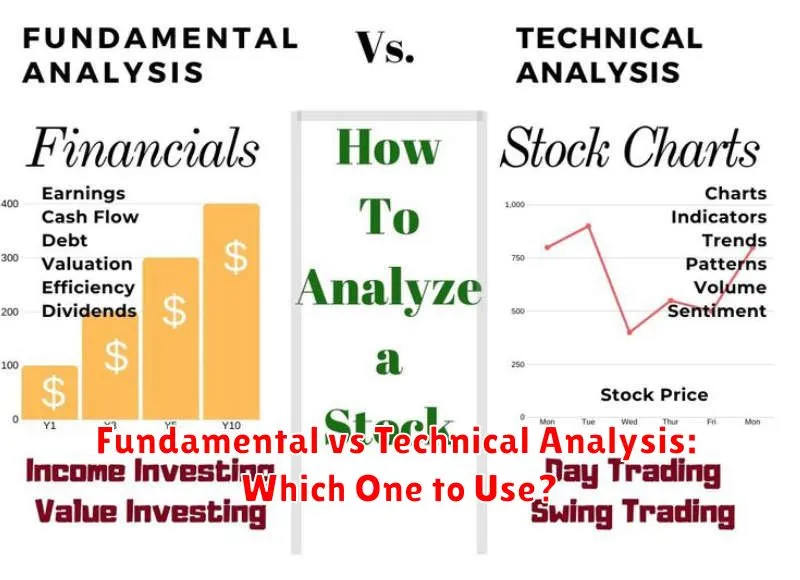
Choosing between fundamental and technical analysis depends on your investment strategy and risk tolerance. Fundamental analysis focuses on a company’s intrinsic value, examining factors like financial statements, management quality, and industry trends. This approach is suitable for long-term investors seeking undervalued companies.
Technical analysis, conversely, uses charts and historical price data to identify patterns and predict future price movements. It’s favored by short-term traders looking for quick profits. This method relies on market sentiment and price action rather than a company’s underlying value.
Many successful investors utilize a combination of both. Fundamental analysis helps identify promising companies, while technical analysis can time entry and exit points for optimal returns. The best approach is the one that aligns with your investment goals, timeframe, and understanding of the market.
The Importance of Portfolio Diversification
Diversification is a cornerstone of successful stock market investing. It involves spreading your investments across a variety of asset classes (stocks, bonds, real estate, etc.) and sectors (technology, healthcare, energy, etc.).
The primary benefit of diversification is risk reduction. By not putting all your eggs in one basket, you lessen the impact of any single investment performing poorly. If one sector underperforms, others may offset those losses, protecting your overall portfolio value.
Diversification also allows for potential growth across different market segments. Some investments will inevitably outperform others, and a diversified portfolio increases your chances of capitalizing on those opportunities. It’s important to note that while diversification doesn’t guarantee profits, it significantly mitigates downside risk.
Proper diversification requires careful consideration of your risk tolerance, investment goals, and time horizon. A financial advisor can help you create a portfolio tailored to your specific needs. Ultimately, diversification is a critical strategy for building a strong and resilient investment portfolio over the long term.
How to Manage Risk in Stock Investments
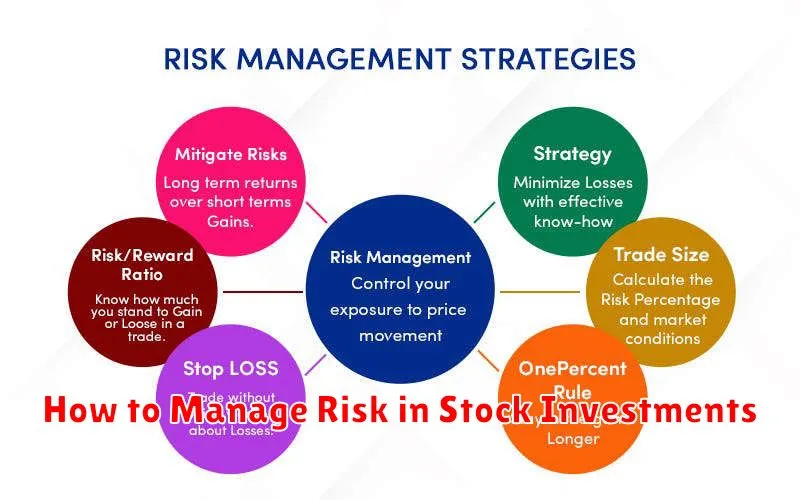
Investing in the stock market offers the potential for significant returns, but it also carries inherent risks. Effectively managing these risks is crucial for long-term success.
A key strategy is diversification. Don’t put all your eggs in one basket. Spread your investments across different companies, sectors, and asset classes to reduce the impact of any single investment’s poor performance.
Dollar-cost averaging is another valuable tool. This involves investing a fixed amount of money at regular intervals, regardless of the market’s fluctuations. This strategy reduces the risk of investing a large sum at a market peak.
Understanding your own risk tolerance is paramount. Are you comfortable with potentially higher returns that come with higher risk, or do you prefer a more conservative approach with lower potential returns but greater stability? Align your investment strategy with your comfort level.
Research is essential. Before investing in any company, thoroughly research its financial health, business model, and competitive landscape. Don’t rely solely on tips or hype; make informed decisions.
Finally, remember that patience is a virtue. The stock market can be volatile in the short term. A long-term perspective, focusing on your overall investment goals, is vital for weathering market downturns and achieving your financial objectives.
Long-Term vs Short-Term Investing Strategies
Investing in the stock market offers two primary approaches: long-term and short-term investing. Each strategy involves different levels of risk and potential returns.
Long-term investing, typically defined as holding investments for several years or even decades, prioritizes consistent growth over short-term gains. This strategy leverages the power of compound interest and generally involves less frequent trading, minimizing transaction costs and emotional decision-making. It’s often associated with lower risk, although market fluctuations can still occur.
Short-term investing focuses on capitalizing on short-term market movements. This approach, often involving frequent buying and selling, aims for quick profits. However, it carries significantly higher risk due to increased market volatility and the potential for substantial losses. Higher returns are possible, but they are not guaranteed and are often accompanied by a considerable risk tolerance.
The best strategy depends on your individual risk tolerance, financial goals, and time horizon. Long-term investing is generally recommended for beginners due to its lower risk profile and potential for consistent wealth accumulation. Short-term investing is generally considered more advanced and requires substantial market knowledge and expertise.
How to Use Stock Market Indicators for Better Decisions

Stock market indicators provide valuable insights into market trends and help investors make more informed decisions. Understanding and utilizing these indicators effectively is crucial for successful investing.
Moving Averages, such as the 50-day and 200-day moving averages, smooth out price fluctuations and highlight potential support and resistance levels. A bullish crossover occurs when the shorter-term average crosses above the longer-term average, suggesting a potential uptrend. The opposite signals a potential downtrend.
Relative Strength Index (RSI) measures the magnitude of recent price changes to evaluate overbought or oversold conditions. Readings above 70 generally suggest an overbought market, indicating a potential price correction, while readings below 30 suggest an oversold market, indicating a potential rebound. However, RSI should be used in conjunction with other indicators.
Volume confirms price movements. Increased volume during an uptrend strengthens the bullish signal, while decreased volume weakens it. Conversely, high volume during a downtrend confirms the bearish signal.
MACD (Moving Average Convergence Divergence) identifies momentum changes by comparing two moving averages. A bullish crossover (MACD line crossing above the signal line) suggests a potential uptrend, while a bearish crossover suggests a potential downtrend. Divergence between the price and MACD can also provide valuable insights.
It’s crucial to remember that no single indicator provides a perfect prediction. Combining multiple indicators and considering fundamental analysis alongside technical analysis offers a more holistic and reliable approach to investment decision-making.
Common Mistakes to Avoid When Investing in Stocks
Ignoring diversification is a major pitfall. Don’t put all your eggs in one basket; spread your investments across different sectors and asset classes to mitigate risk.
Emotional investing, driven by fear or greed, leads to poor decisions. Develop a long-term strategy and stick to it, avoiding impulsive buys or sells based on market fluctuations.
Lack of research is another common mistake. Thoroughly research companies before investing, understanding their financials, business model, and competitive landscape. Don’t solely rely on tips or hearsay.
Ignoring fees and expenses can significantly eat into your returns. Be mindful of brokerage commissions, expense ratios of mutual funds, and other fees associated with your investments.
Trying to time the market is almost always unsuccessful. Instead of trying to predict market peaks and troughs, focus on a consistent, long-term investment strategy.
Failing to rebalance your portfolio periodically can lead to an imbalance in your asset allocation. Regularly review and adjust your holdings to maintain your desired risk level.
Not having a clear investment plan is a recipe for disaster. Define your financial goals, risk tolerance, and investment timeline before you begin investing. This will guide your decisions and help you stay focused.
