
ESG investing is rapidly gaining traction as more investors seek to align their portfolios with their values. This guide explores Environmental, Social, and Governance (ESG) investing, providing practical strategies for responsible investing and building a sustainable financial future. Learn how to integrate ESG factors into your investment decisions, screen for companies with strong sustainability practices, and contribute to a more responsible and ethical investment landscape while achieving your financial goals.
What is ESG Investing and Why is It Important?
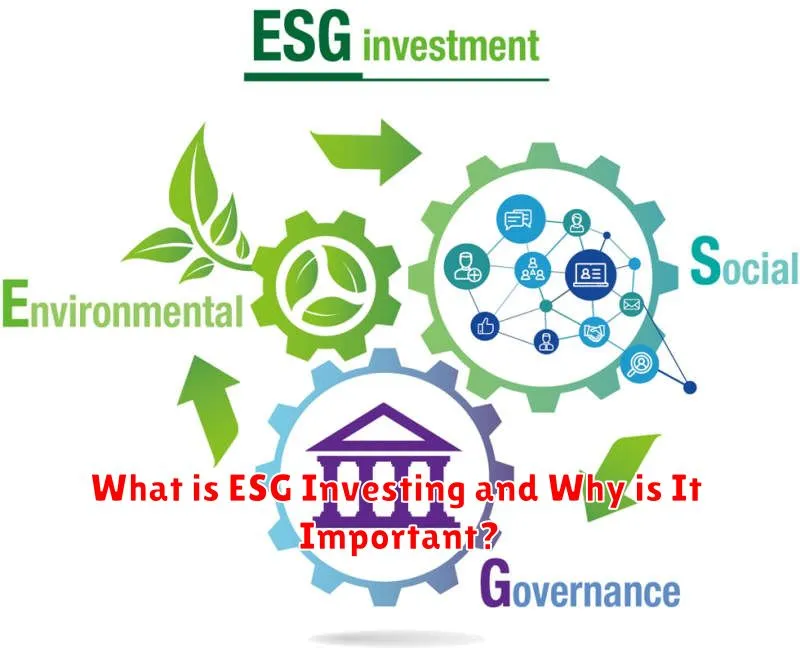
ESG investing, or environmental, social, and governance investing, is an investment approach that considers environmental factors (like climate change and pollution), social factors (like labor practices and human rights), and governance factors (like corporate ethics and transparency) alongside financial returns.
It’s important because it allows investors to align their investments with their values, supporting companies that are committed to sustainability and responsible practices. This approach aims to generate both financial returns and positive social and environmental impact. By considering ESG factors, investors can potentially mitigate risks associated with unsustainable practices and identify opportunities in growing sustainable markets.
Furthermore, growing awareness of climate change and social issues has led to increased demand for ESG investments, making it a significant trend within the broader investment landscape. The importance of ESG investing reflects a shift towards a more holistic approach to investing, considering not only financial profit but also its impact on the planet and society.
How to Evaluate Companies Based on ESG Criteria
Evaluating companies based on Environmental, Social, and Governance (ESG) criteria requires a multifaceted approach. It goes beyond traditional financial metrics to assess a company’s impact on various stakeholders and its long-term sustainability.
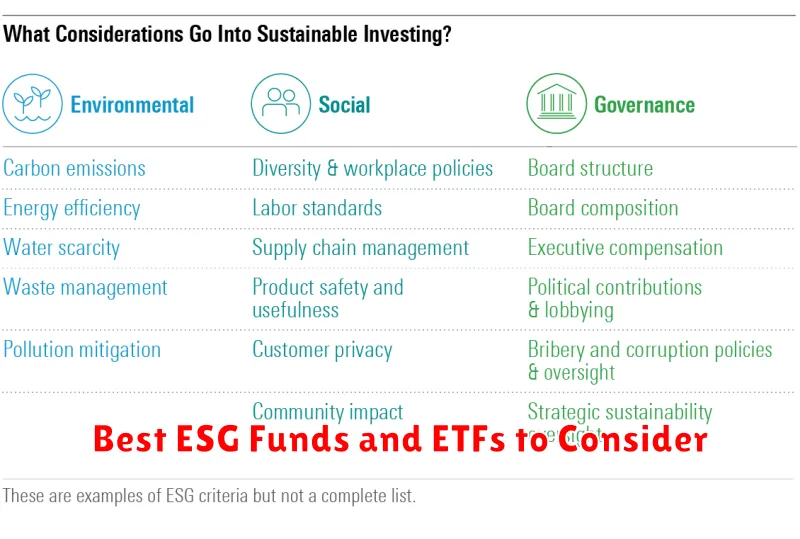
Environmental factors examine a company’s impact on the environment, including its carbon footprint, waste management, resource consumption, and pollution levels. Look for evidence of sustainable practices, renewable energy usage, and efforts to reduce environmental harm. Data sources like sustainability reports and third-party ratings can provide insights.
Social factors assess a company’s relationship with its employees, customers, and the wider community. Key areas to consider include labor practices, human rights, diversity and inclusion, product safety, and community engagement. Analyzing employee satisfaction surveys, supplier audits, and public statements can shed light on these aspects.
Governance factors focus on a company’s leadership, executive compensation, board diversity, risk management, and ethical business practices. Strong governance ensures transparency, accountability, and responsible decision-making. Examine corporate governance reports, voting records, and independent audits to gauge the effectiveness of corporate governance.
To effectively evaluate companies, consider using a combination of quantitative data (e.g., carbon emissions, employee turnover rates) and qualitative data (e.g., sustainability reports, news articles, stakeholder feedback). Third-party ESG ratings can offer a standardized assessment, but it is crucial to critically evaluate the methodology and data used by these agencies. Ultimately, a comprehensive ESG evaluation should provide a holistic view of a company’s sustainability and responsible business practices.
The Growth of Sustainable and Ethical Investing
Sustainable and ethical investing, often encompassed under the ESG (Environmental, Social, and Governance) umbrella, has experienced remarkable growth in recent years. This surge reflects a growing awareness among investors of the interconnectedness between financial performance and environmental and social impact.
Increased investor demand for responsible investments is a primary driver. More individuals and institutions are actively seeking investment opportunities aligned with their values, demanding transparency and accountability from companies regarding their ESG performance.
This growth is further fueled by regulatory changes and increased corporate reporting requirements related to ESG factors. Governments and regulatory bodies worldwide are increasingly recognizing the importance of incorporating ESG considerations into financial decision-making, leading to greater standardization and disclosure.
Furthermore, strong financial performance of many ESG-focused funds is proving that sustainable investing is not just ethically sound, but also financially viable. This success story is attracting a wider range of investors, further accelerating the growth trajectory.
The ongoing growth demonstrates a significant shift in the investment landscape, with ESG considerations becoming increasingly mainstream and influencing investment decisions across asset classes.
Best ESG Funds and ETFs to Consider
Choosing the right ESG (Environmental, Social, and Governance) funds and ETFs requires careful consideration of your investment goals and risk tolerance. Several factors, including the fund’s investment strategy, sustainability criteria, and expense ratio, should be evaluated.
Popular choices often include index funds tracking broad market indices with ESG screens, actively managed funds focusing on specific ESG themes (e.g., renewable energy), and ETFs offering diversified exposure to ESG-focused companies. Remember to research the fund’s portfolio holdings and methodology for assessing ESG factors to ensure alignment with your values.
It’s crucial to understand that the ESG landscape is evolving, with varying standards and definitions. Consider consulting a financial advisor to determine which funds best suit your individual circumstances and risk profile. Always diversify your investments to mitigate risk.
While past performance doesn’t guarantee future returns, examining a fund’s track record can provide insights into its historical performance and investment approach. Furthermore, pay close attention to the fund’s transparency and reporting practices regarding its ESG integration process.
How ESG Investments Perform Compared to Traditional Assets
The performance of ESG (Environmental, Social, and Governance) investments compared to traditional assets is a subject of ongoing debate and research. Some studies suggest that ESG funds can achieve comparable or even superior returns to traditional investments over the long term. This is often attributed to the identification and mitigation of material ESG risks, leading to more resilient and financially sound companies.
However, other studies have found no significant difference in performance between ESG and non-ESG investments. It’s important to note that the methodologies used in these studies vary widely, making direct comparisons challenging. Furthermore, the definition of “ESG” itself can differ across investment strategies, influencing performance results.
Several factors affect the performance of ESG investments. These include the specific ESG criteria used, the investment strategy employed, the market conditions, and the time horizon considered. Therefore, it’s difficult to draw definitive conclusions about consistent outperformance. The focus should be on the long-term alignment of values with investment choices rather than solely on short-term returns.
Ultimately, the performance of ESG investments is complex and nuanced. While some studies suggest potential for comparable or superior returns, it’s crucial to avoid generalizations. Investors should carefully consider their individual financial goals and risk tolerance when deciding whether to incorporate ESG factors into their investment strategy.
Regulations and Standards in ESG Investing
The landscape of Environmental, Social, and Governance (ESG) investing is evolving rapidly, leading to a growing need for consistent regulations and standards. Currently, there’s no single, globally unified set of rules governing ESG investing, resulting in a patchwork of approaches across different jurisdictions.
Several organizations are working to standardize ESG reporting and data collection. The Sustainability Accounting Standards Board (SASB) and the Global Reporting Initiative (GRI) provide frameworks for companies to disclose their ESG performance. However, the adoption and enforcement of these frameworks vary significantly.
Government regulations are also playing an increasingly important role. Many countries are introducing legislation aimed at improving corporate transparency and accountability regarding ESG factors. These regulations often focus on mandatory disclosures, particularly in areas such as climate change and human rights. The European Union’s Sustainable Finance Disclosure Regulation (SFDR) is a prime example of this trend, setting stringent requirements for asset managers and financial institutions.
Despite these advancements, challenges remain. Inconsistency in ESG data and “greenwashing”—the practice of making misleading or unsubstantiated claims about a company’s environmental performance—continue to be significant concerns. The lack of universal standards makes it difficult to compare companies across different sectors and geographies. Further development and harmonization of regulations and standards are crucial for the growth and integrity of ESG investing.
How to Build an ESG-Focused Investment Portfolio

Building an ESG-focused investment portfolio requires a strategic approach. Begin by defining your ESG priorities. Do you prioritize environmental concerns, social justice issues, or strong corporate governance? This will guide your investment choices.
Next, research and select ESG-screened funds or individual companies. Many mutual funds and ETFs explicitly integrate ESG factors into their investment strategies. Alternatively, you can research individual companies with strong ESG performance ratings from reputable agencies.
Diversification remains crucial. Spread your investments across different sectors, asset classes, and geographies to mitigate risk. Consider incorporating both established ESG leaders and companies demonstrating strong improvement in their ESG performance.
Regularly review and rebalance your portfolio. ESG performance and ratings can change over time. Stay informed about the performance of your investments and make adjustments as needed to align with your evolving ESG goals and market conditions.
Finally, consider seeking professional advice from a financial advisor experienced in ESG investing. They can help you navigate the complexities of ESG investing and tailor a portfolio to your specific financial goals and risk tolerance.
The Future of Responsible Investing
The future of responsible investing hinges on several key factors. Increased transparency and standardization in ESG (Environmental, Social, and Governance) data reporting are crucial. This will allow for more accurate assessments of companies’ sustainability efforts and better informed investment decisions. Furthermore, the growing influence of regulatory frameworks globally will shape the landscape, driving greater accountability and pushing companies to integrate ESG factors more deeply into their operations.
Technological advancements, such as artificial intelligence and machine learning, will play a vital role in analyzing vast ESG datasets, identifying emerging risks and opportunities, and enhancing the efficiency of responsible investment strategies. The growing demand from investors and consumers for sustainable and ethical options will further accelerate the adoption of responsible investing practices. This includes a shift toward impact investing, where the goal is to generate both financial returns and positive social or environmental impact.
Ultimately, the future of responsible investing lies in its ability to demonstrate tangible value creation. This means showcasing how ESG integration leads to improved financial performance, enhanced risk management, and long-term resilience for businesses and portfolios. As the understanding and acceptance of ESG factors continue to evolve, responsible investing will likely become the norm, not the exception, in the financial industry.
