
Protecting your cryptocurrency investments requires a proactive approach to security. This article explores crucial strategies for safeguarding your digital assets, covering topics such as wallet security, password management, phishing awareness, and best practices to minimize your risk of cryptocurrency theft and financial loss. Learn how to navigate the complexities of blockchain technology and implement robust security measures to protect your crypto portfolio.
Common Cryptocurrency Security Threats and How to Avoid Them
The cryptocurrency landscape, while offering exciting opportunities, is rife with security risks. Understanding these threats is crucial for protecting your digital assets.
Phishing scams are a prevalent threat. These involve deceptive emails, websites, or messages designed to steal your login credentials or private keys. Avoid clicking on suspicious links, verifying sender authenticity, and using strong, unique passwords for each exchange or wallet.
Malware can infect your devices and secretly steal your cryptocurrency. Protect yourself by installing reputable antivirus software, keeping it updated, and avoiding downloading files from untrusted sources.
Exchange hacks are a significant concern. While exchanges implement security measures, they remain vulnerable to sophisticated attacks. Minimize risk by diversifying your holdings across multiple exchanges and using two-factor authentication (2FA).
Hardware wallet vulnerabilities, while rare, can exist. Ensure you purchase your hardware wallet from a reputable vendor and follow the manufacturer’s security guidelines diligently. Regularly update firmware and be wary of counterfeit devices.
Private key loss is an irreversible catastrophe. Securely store your private keys offline, ideally using a hardware wallet or a well-protected paper wallet. Never share your private keys with anyone.
Social engineering attacks manipulate individuals into revealing sensitive information. Be wary of unsolicited requests for personal details or assistance. Exercise caution and verify information independently.
Sim swapping involves malicious actors obtaining control of your SIM card to gain access to your accounts via SMS-based two-factor authentication (2FA). Employ robust 2FA methods that don’t rely solely on SMS, such as authenticator apps or hardware security keys.
By understanding these common threats and proactively implementing these preventative measures, you significantly reduce the risk of losing your cryptocurrency.
The Importance of Using Hardware Wallets
In the realm of cryptocurrency security, safeguarding your digital assets is paramount. Hardware wallets offer a significant advantage in achieving this goal. Unlike software wallets which are vulnerable to malware and online attacks, hardware wallets store your private keys offline, significantly reducing the risk of theft or unauthorized access.
The offline nature of hardware wallets is their most crucial security feature. Because your private keys never connect to the internet, they are impervious to phishing scams, keyloggers, and other online threats that target software wallets. This provides an unparalleled level of protection against hacking and other malicious activities.
Furthermore, reputable hardware wallets utilize robust security chips and advanced encryption technologies to further enhance protection. This makes them significantly more resistant to physical tampering and unauthorized access attempts compared to software-based solutions. The added layer of security provided by a dedicated device minimizes the risk of losing access to your cryptocurrency holdings due to compromised software or device failures.
While the initial investment in a hardware wallet may seem significant, the enhanced security and peace of mind it provides, especially for significant cryptocurrency holdings, far outweigh the cost. It is a crucial investment for anyone serious about protecting their digital assets.
How to Set Up Two-Factor Authentication for Crypto Accounts
Two-factor authentication (2FA) significantly enhances the security of your cryptocurrency accounts. It adds an extra layer of protection beyond your password, making it much harder for unauthorized individuals to access your funds.
The process varies slightly depending on the exchange or platform, but generally involves these steps:
-
Access your account settings: Locate the security or settings section within your cryptocurrency exchange or wallet application.
-
Enable 2FA: Look for the option to enable two-factor authentication. Common methods include authenticator apps (like Google Authenticator or Authy), SMS verification, or hardware security keys (like YubiKey).
-
Follow the instructions: Each method will have specific instructions. For authenticator apps, you’ll typically scan a QR code. For SMS, you’ll provide your phone number. For hardware keys, you’ll need to plug the key into your computer and follow the on-screen prompts.
-
Store your backup codes securely: Many 2FA methods provide backup codes. Write these down and store them in a safe, offline location. If you lose access to your primary 2FA method, these codes will allow you to regain access to your account.
Choosing a method: Authenticator apps are generally considered the most secure option, offering better protection against SIM swapping attacks than SMS. Hardware security keys provide the highest level of security but require a physical device.
Remember to enable 2FA on all your cryptocurrency accounts for comprehensive protection of your digital assets.
Understanding Private Keys and Seed Phrases
Private keys are cryptographic secrets that grant you access to your cryptocurrency holdings. Think of them as the password to your digital wallet. Without your private key, you cannot access or spend your cryptocurrency. They are typically long strings of seemingly random characters.
A seed phrase, also known as a mnemonic phrase, is a list of words that acts as a backup for your private keys. It’s a more user-friendly way to secure your assets. If you lose access to your private keys, your seed phrase allows you to recover them and regain control of your funds. It is crucial to keep your seed phrase safe and secure, as anyone with access to it can control your cryptocurrency.
Security best practices dictate that you never share your private keys or seed phrase with anyone. Store them offline, ideally in a physical, secure location, and use a strong, unique password for your crypto wallet. Consider using a hardware wallet for enhanced security, as it stores your private keys offline and protects them from hacking attempts.
Understanding the importance of securely managing your private keys and seed phrases is fundamental to protecting your cryptocurrency investments. Losing access to either can result in the irretrievable loss of your digital assets.
Avoiding Phishing Scams in the Crypto Space
The cryptocurrency space is rife with phishing scams designed to steal your digital assets. These scams often mimic legitimate platforms or individuals, urging you to reveal sensitive information like private keys, seed phrases, or login credentials.
Vigilance is your first line of defense. Never click on suspicious links or download attachments from unknown senders. Always verify the authenticity of websites and email addresses before entering any personal information. Look for signs of legitimate security measures such as HTTPS and strong encryption.
Strong passwords and two-factor authentication (2FA) are essential. Use unique, complex passwords for each cryptocurrency exchange and wallet. Enable 2FA whenever possible to add an extra layer of security.
Educate yourself on common phishing tactics. Scammers often use urgency, threats, or promises of unrealistic rewards to pressure victims into acting quickly. Take your time, and if something seems too good to be true, it probably is.
Finally, be wary of unsolicited communications requesting your private information. Legitimate cryptocurrency platforms will never ask for your seed phrase or private keys directly. If you receive such a request, it’s almost certainly a scam.
The Role of Decentralized Exchanges in Security
Decentralized exchanges (DEXs) offer a different security paradigm compared to centralized exchanges (CEXs). Security on DEXs primarily relies on the cryptographic security of the underlying blockchain and smart contracts. This eliminates single points of failure, a major vulnerability in CEXs susceptible to hacking and theft.
However, smart contract vulnerabilities remain a significant risk. Bugs in the code can be exploited, leading to loss of funds. Therefore, thorough audits of smart contracts are crucial before using any DEX. Furthermore, users should be wary of phishing scams and malicious websites masquerading as legitimate DEX platforms.
While DEXs reduce the risk of custodial theft, users retain sole responsibility for securing their private keys. Losing access to these keys results in the irreversible loss of funds. Strong password management and secure hardware wallets are essential security measures for DEX users.
In summary, DEXs enhance security by decentralizing control, but users must remain vigilant against smart contract risks and diligently protect their private keys. The inherent security of DEXs is not a guarantee against all forms of loss; rather, it shifts the responsibility and associated risks to the user.
How to Safely Store and Transfer Cryptocurrencies
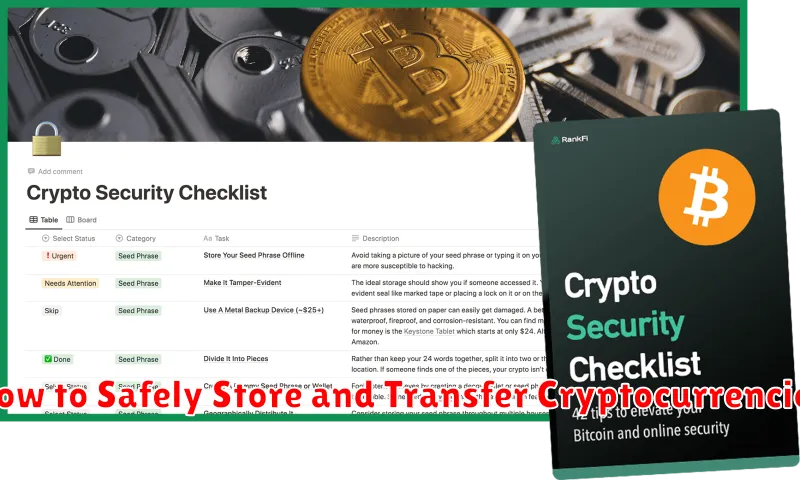
Safeguarding your cryptocurrencies involves employing a multi-layered security approach. Hardware wallets offer the most secure storage, keeping your private keys offline and shielded from online threats. For smaller amounts or more frequent transactions, consider reputable software wallets with strong security features like two-factor authentication (2FA).
When transferring cryptocurrencies, prioritize verified exchanges and wallets. Double-check the recipient’s address meticulously before confirming any transaction. Never share your private keys or seed phrases with anyone. Consider using a paper wallet for long-term storage of significant amounts, ensuring it’s stored securely and offline.
Regularly update your software and firmware to patch security vulnerabilities. Be wary of phishing scams and suspicious emails or websites requesting your private information. Enable 2FA whenever possible for an added layer of protection on your exchanges and wallets. Understand the risks involved and choose storage and transfer methods suitable for your level of experience and the value of your assets.
Best Practices for Secure Crypto Trading
Secure a strong, unique password for each exchange and use a password manager to store them. Avoid reusing passwords across different platforms.
Enable two-factor authentication (2FA) on all your exchanges and wallets. This adds an extra layer of security, making it significantly harder for unauthorized users to access your accounts.
Only use reputable and well-established exchanges. Research thoroughly before selecting a platform; look for security features and positive user reviews.
Be cautious of phishing scams. Never click on suspicious links or provide your login credentials to anyone. Legitimate exchanges will never ask for your private keys or seed phrases.
Store your cryptocurrency offline in a hardware wallet whenever possible. Hardware wallets offer significantly better security than software wallets or exchanges.
Regularly update your software on your computers, phones, and any devices used for crypto trading. Outdated software is vulnerable to malware and exploits.
Diversify your holdings. Don’t put all your eggs in one basket. Spread your investments across different cryptocurrencies to mitigate risk.
Keep your software updated. Regularly update your operating systems, antivirus software and any applications related to crypto trading. Outdated software is more vulnerable to attacks.
Stay informed about security threats. Keep up-to-date with the latest security news and best practices in the cryptocurrency space.
Regularly review your transactions to detect any unauthorized activity and report suspicious behavior immediately.
